
- Michael Lowery
- August 10, 2026
- Home Pest Solutions
You walk through the front door after a long day at work, take a deep breath, and notice it immediately, that strange, damp, earthy odor lingering in the hallway. You check the laundry room, inspect the bathroom sink, and even sniff the couch cushion. Everything looks clean, yet the faint smell of a wet basement persists.
Where is it coming from? Look straight down.
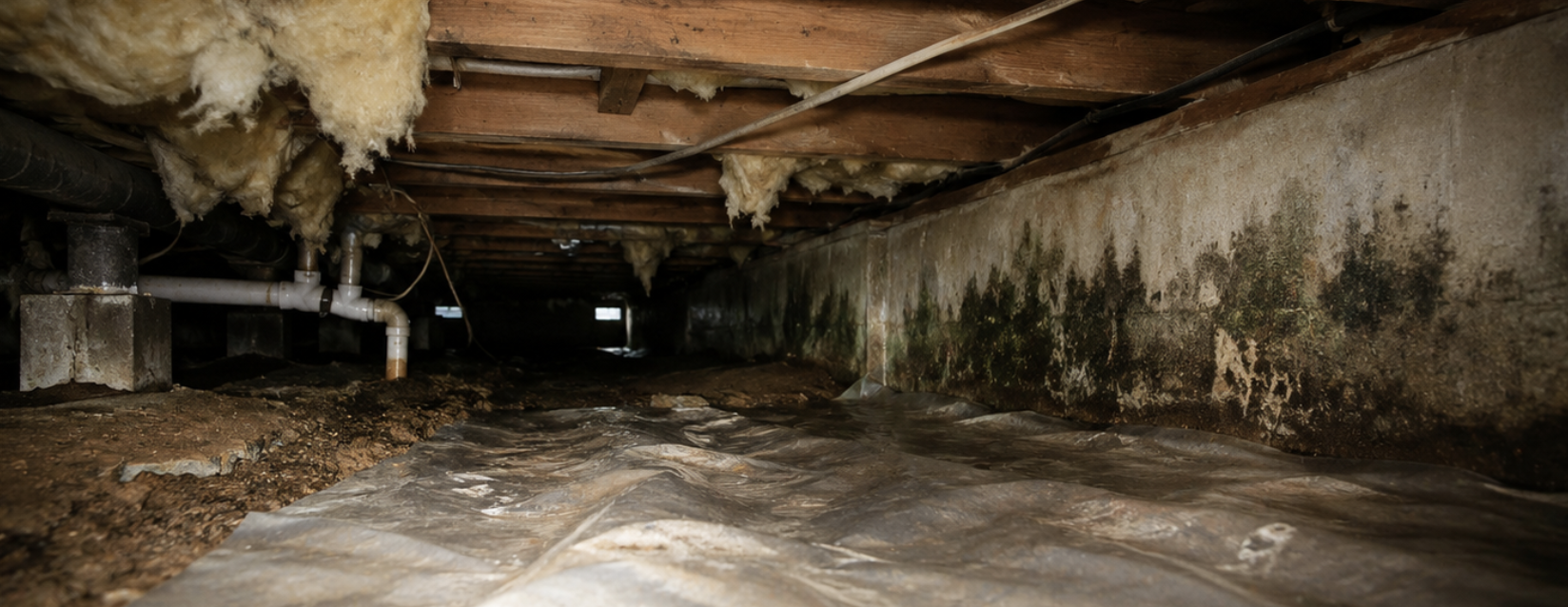
As autumn rain rolls in and cool nights mix with humid soil, the dirt crawlspace beneath your subfloor turns into a giant sponge. And because air moves upward through your house like a chimney, whatever is brewing down in the dark eventually makes its way into your kids’ bedrooms.
The Great Crawlspace Myth: “If I Can’t See It, It Can’t Hurt My Home”
Many homeowners assume that as long as the foundation isn’t flooded, the space under the floorboards is doing just fine. Unfortunately, moisture isn’t always about pooling water, it’s often about invisible humidity.
Here is what is actually happening under your feet during the damp fall months:
- The Wood Absorbs the Dampness: Subflooring and support beams naturally soak up moisture from the dirt floor below. When wood stays damp for too long, fungal spores wake up and start spreading.
- Insulation Turns Into a Wet Blanket: Fiberglass insulation acts like a giant sponge. Once it gets heavy with damp air, it sags, pulls away from the floorboards, and leaves your hardwood floors feeling icy cold on chilly mornings.
- The “Pest Highway” Opens Up: Pests don’t care about autumn cold snaps if they have a humid, sheltered cave under your house. High moisture draws in everything from silverfish and roaches to wood-destroying beetles.
How to Spot Dampness Before It Turns Into Major Headaches
You don’t need to crawl into the dirt with a flashlight to figure out if your foundation needs attention. Your living room will usually give you a few subtle hints.
Quick Parent Check: Keep an eye on your indoor air and floors this season. If your hardwood floorboards are slightly cupping at the edges, if the air feels weirdly sticky even with the AC or heat running, or if family members suddenly start sneezing more often at home, trapped ground moisture is usually the prime suspect.
Turning a Damp Foundation Into a Clean, Dry Space
The fix for a damp home isn’t complicated, but it does require blocking moisture at the ground level. Installing a heavy-duty vapor barrier over the exposed earth keeps dampness trapped in the soil where it belongs. When combined with sealed foundation vents and proper drainage, you effectively turn a dark, dirty pit into a dry, clean foundation.
The best part? Closing off that dampness instantly cuts off the main water source for invasive autumn pests, protects your home’s structural wood, and keeps the air your family breathes smelling clean and fresh all winter long.
If you suspect damp air or hidden pests are lurking under your subfloor this season, the Ecopest team is always here to help you inspect your foundation, find the root cause, and keep your home protected from the ground up.
